Wednesday, August 6, 2014

Armenian as a Condition of Love

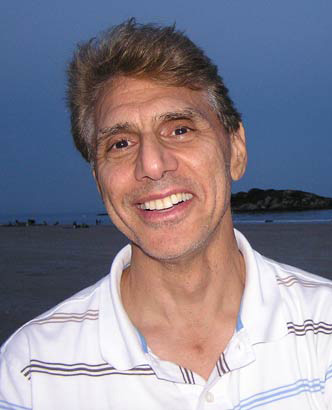
By Victor Konoplev


Obviously, it was God’s decision to blow the winds from the top of Mount Ararat to a tiny city, located thousands of miles away from it, exactly when my parents planed to conceive me. I willingly believe in this, because I felt the attracting power and spiritual verve on my own skin during that very moment when I saw Mount Ararat for the first time, crossing the Ararat Valley.


By a chance discovery, the centuries-old “recharges” of Mount Ararat and its genetic code was so identical to the planetary genetic code, that they became my very own and too familiar just like the air we breath, or the wind causing us to wrap ourselves in clothing, or, on the contrary, we embrace it with open arms as we face Mount Ararat to regain our equilibrium. Just like the sand in the desert, being secret and extremal, or the fertile soil providing us very generously with its gravely important vital necessities, this gives me now a clear perception of the astonishing attraction of the offsprings of Noah.


Armenia is simply the Universe, unlimited and all-embracing with its “black holes” and galaxies, but in contrast to outer space, there is no vacuum there. On the contrary, Armenia is filled with scents, taste, a striking display of visual marvels … And it’s not like rubbing amber to cause an electrostatic phenomena, but Armenia is amalgamated through essence and uniqueness of every element of that construction, combining the designation of exceptional qualities of All-Armenian phenomenon in a permanent critical moment of truth of the uniqueness of its existence, allowing it to expand the boundaries of its own universe. And, as there are no two similar stars in space, there are no two similar Armenians, likewise. This individuality and irrationality of the Armenian people is one of the most existential for no other nation can be compared to them.


Armenia, often sharing boarders with others, over the centuries not only was interwoven within the rich layers of history, but it has laid a firm ground by propagating their neighbors with the genius of its essence. The Armenians have sprouted up in them so rapidly and conveniently that even the introverted “breeders” can’t completely eradicate this culture.


The Armenians as a historical reality took place as far as the history of mankind took place. We find them documented on every page of human civilization: in the Bible and in cuneiform tablets or narrations of chroniclers. And this domestically peculiar self-consciousness encourages and validates some or irritates and antagonizes others, mainly the barbarians and nomads. The Armenians, because of their natural openness, honesty and somewhat child’s credulity have always been victims of historical intrigue and machinations. The fact is so amazing, that the Armenians instead of being bitter, they re-built their homes, created their families and have faithfully served their country. This is not a historical mission to demonstrate to the entire world, especially the necessity of being human, of being that the world longs for in a global sense.


Their harmonious planetary existence is confirmed by each sign of Mesropian alphabet. When one is dealing with them fist, one truly enjoys the perfection of each line, each bend and each bulge of the alphabet. They are not simply signs. They are turns and bends of the very vital lines owed to the Armenians: the periods of their peace and war, the embodiment of their spiritual essence, the identity of the Armenian nature — the controversial and zestfully beautiful at the same time. Some researchers of the Armenian alphabet have already noticed that the number of elements in the angular and rounded letters of the Armenian alphabet are the same. It become known that the roundness of Armenian letters always strive for peace. However, in reality, it becomes very obvious that the lines and corners grant the Armenian alphabet the golden seal of harmony. Learning the Armenian alphabet, one can see in the curved section of the line an inexhaustible stock of ideas and creativity. This is subconscious desire to inventively think and live in the environment that gives rise to a significantly large number of talented and self sufficient people.


Armenia is difficult to be understood in the context of the historical conditions surrounding its history. Armenia exists as a feeling, as a state of mind and condition of soul. Armenia is so turbulently temptatious and emotional, that its energy rolls over, permeates through and through, and tears apart from its routine. Armenia is like a violin, being able to cause the sounds of the ebb and the flow of love, a storm of outrage, streams of nostalgia, fires of passion and flare of revelations. Evidently, God’s Angel Himself plays on this violin by protecting Armenia. While this charming melody keeps sounding, the Armenians will not cease to pass away, meaning that this sensationally marvelous condition of love will never expire or die.


Translator: Mark Karamian


Armenian as a Condition of Love

Yerevan Against Peacekeeping Operation In Karabakh

Seyran Ohanian: Armed Forces of Armenia and Karabakh are the Main Safeguard Against Azerbaijani Aggression


YEREVAN — Armenia sees no need for the deployment of third-party peacekeeping troops in the Nagorno-Karabakh conflict zone despite a sharp rise in ceasefire violations there, Defense Minister Seyran Ohanian said on Wednesday.


“True, there is a no-war-no-peace situation there because our enemy constantly violates the ceasefire,” Ohanian told a news conference in Yerevan. “But we maintain that situation thanks to the combat readiness of our troops.”


“In that sense, we can accomplish our tasks on our own, and right now there is now need for the deployment of peacekeeping forces,” he said. He argued that despite the absence of such troops the conflicting parties have managed to avoid a full-scale war for the past two decades.


The remarks came amid mounting speculation in Yerevan that Russia is keen to deploy its troops around Karabakh with the aim of strengthening its leverage against Armenia and Azerbaijan and bolstering its broader presence in the region. Some local pundits claim that Russian President Vladimir Putin will push for this when he holds talks with his Armenian and Azerbaijani counterparts in Sochi later this week.


Ohanian insisted that the armed forces of Armenia and Karabakh remain the main safeguard against a renewed Armenian-Azerbaijani war. He said the latest upsurge in fighting, widely regarded by the Armenian side as a serious setback for the Azerbaijani military, underscored their strength and Azerbaijan’s inability to forcibly resolve the conflict. Baku has failed to gain a strategic military advantage despite a decade-long massive military buildup, he claimed.


“We need to keep in mind that any weapon requires a person qualified enough to use it,” continued Ohanian. “Acquisition of large quantities of weapons requires their personnel to learn how to use them effectively.”


“The armed forces of the Republic of Armenia are defending their population and borders. The enemy is trying to mislead not only the international community, but also its own people, disseminating hatred towards Armenians,” Ohanian said.


At least 15 Azerbaijani soldiers have reportedly been killed since the escalation on July 31 of fighting along “the line of contact” around Karabakh and the Armenian-Azerbaijani border. The Defense Ministry in Baku said on Tuesday that two other soldiers serving near the Karabakh frontline have accidentally shot and killed themselves.


The Armenian combat death toll in the same period stands at 6.


Yerevan Against Peacekeeping Operation In Karabakh

Erdogan Under Fire for 'Anti-Armenian Slur'

ISTANBUL — Turkish Prime Minister — and presidential hopeful — Recep Tayyip Erdogan sparked an outcry Wednesday after using what critics said was a racist slur against Armenians in a television interview.


During a live interview on the private NTV channel late Tuesday, Erdogan complained that the opposition was carrying out a smear campaign against him by claiming that he was from another ethnic origin.


“They have also said a lot of things about me,” he said, according to Hurriyet Daily News. “One of them came and said I was a Georgian. Then another came up and, I beg your pardon, called me uglier things, saying I was Armenian.”


“What I have learned from my grandfather, my father and all of them is that I am Turkish. That’s it,” added the controversial Turkish premier.


His comment that it was ugly to be called an Armenian drew anger on social media, further inflaming tensions days ahead of Sunday’s presidential election where Erdogan is hot favorite to become head of state.


“Excuse me, but please go and become the president of another country,” wrote prominent Turkish-Armenian columnist Hayko Bagdat in an angry response to Erdogan.


Melda Onur, a lawmaker from the main opposition Republican People’s Party (CHP), asked: “Is there any ethnic group who could escape Erdogan’s hate speech?”


Critics accused Erdogan of playing the sectarian and the ethnic card in the run-up to the presidential elections.


“Is it ugly to be an Armenian or is it a shame? Please explain now!” demanded Nevsin Mengu, an anchorwoman at the private CNN-Turk television.


Turkey’s Armenian minority — the remnants of a much greater community that lived during the Ottoman Empire — numbers around 70,000 people, most of them living in Istanbul.


They often complain of being considered second-class citizens in a country where “Armenian” is often considered a curse.


During an election rally last weekend, the 61-year-old premier urged the CHP leader Kemal Kilicdaroglu to make clear he belongs to the country’s minority Alevi community, an offshoot of Shia Islam.


“Kilicdaroglu, you can be an Alevi. I respect you. Don’t be afraid to say it. I am Sunni and can say it without fear. There is no need to deceive people,” he said.


Turkey’s outgoing President Abdullah Gul similarly took offense in 2009 when an opposition lawmaker, Canan Aritman, claimed that he does not denounce Turkish intellectuals apologizing for the 1915 Armenian genocide in the Ottoman Empire because his mother was an ethnic Armenian. Gul strongly denied having Armenian origin and sued Aritman for defamation of character. A Turkish court ruled out against the oppositionist.


Erdogan Under Fire for 'Anti-Armenian Slur'

Monday, August 4, 2014

Massachusetts Election Politics and the Armenian American Voter

By David Boyajian


OLYMPUS DIGITAL CAMERAFor decades, top Jewish organizations such as the Anti-Defamation League (ADL) and American Israel Public Affairs Committee (AIPAC) have colluded with Turkey to deny, and defeat Congressional resolutions on, the Armenian genocide.


Not surprisingly, those organizations’ scandalous double standards figure in Massachusetts elections in September and November: some candidates are not as supportive of Armenian issues as they’d like you to believe.


Briefly recall 2007- 2008. Over a dozen Massachusetts cities and the umbrella Massachusetts Municipal Association tossed out the ADL’s so-called “No Place for Hate” anti-bias program. They recoiled at the ADL’s bare-faced hypocrisy regarding genocide. The clash spawned hundreds of articles in national and international media and rocked Israeli – Turkish relations.


Three months ago, under fire from students and faculty at Boston’s Suffolk University Law School and human rights activists over the Armenian genocide and other concerns, keynote commencement speaker Abraham Foxman, ADL National Director, mentioned in passing the words “Armenian genocide.” It was, of course, decades overdue and undoubtedly insincere. Foxman, renowned for his bullying manner, had the gall to imply that he had been “bullied” by those who protested his speaking and receiving an honorary degree.


In any case, the ADL has yet to issue a formal, unambiguous statement on the Armenian genocide and continues to oppose its recognition. See www.NoPlaceForDenial.com.


Martha Coakley’s Lack of Valor

Attorney General Martha Coakley is running for the Democratic nomination for governor.


In late 2007, while the ADL was openly lying about the Armenian genocide, Coakley accepted the New England ADL’s Woman of Valor award. Precisely what valorous act Coakley — in office only 10 months — had performed remains a mystery.


The Armenian National Committee of America’s Massachusetts chapter pronounced it “unfathomable that Coakley and her team would be unaware of the [2007] scandal … would she have accepted an award from an organization with a shaky stance on the realities of the Holocaust?” Coakley has also attended and co-chaired ADL events since then.


In 2010, in her abortive race to replace the late Senator Ted Kennedy, Coakley made a last-minute play for Armenian American votes by acknowledging the Armenian genocide. Granted, after Turks sued the state, Coakley successfully defended a Massachusetts genocide education law that included the Armenian genocide. But it was actually Tom Reilly, her predecessor, who initiated the state’s legal defense.


State Treasurer Steve Grossman, himself a former ADL and AIPAC officer, is Coakley’s opponent in the September Democratic primary for governor.


Steve Grossman and AIPAC

When the ADL – Armenian issue exploded in 2007, Grossman — not yet a public official — openly acknowledged the Armenian genocide and urged the ADL to change its stance. He had done the same, he claims, when he was an ADL officer. However, there seems to be no public record of that.


From 1992 to early 1997, Grossman was National Chairman of the powerful AIPAC, which has been demonstratively anti-Armenian American. He resigned that post to chair the National Democratic Party.


According to Yola Habif Johnston, a director at JINSA (Jewish Institute for National Security Affairs), AIPAC — plus the American Jewish Committee, B’nai B’rith, and JINSA — “have been working with the Turks” since at least 1991 to stop U.S. recognition of the Armenian genocide. That puts Grossman at the center of AIPAC’s anti-Armenian efforts.


The Washington Times has reported that Keith Weissman, an AIPAC senior researcher, enthusiastically helped Turks defeat an Armenian genocide resolution in the U.S. House in October of 2000. Weissman was an “architect of the Jewish community’s support for Turkey.” AIPAC “even offered training to Turkish Americans on how to establish a successful lobby.”


In 2005, the Federal government indicted Weissman and fellow AIPACer Steve Rosen for passing classified information to Israel. Probably due to behind-the-scenes political influence, charges were dropped in 2009.


Beginning in 1993, Grossman’s and Weissman’s tenures at AIPAC overlapped for four years. Yet Grossman has apparently never publicly criticized AIPAC’s or Weissman’s anti-Armenian activities.


Warren Tolman and the ADL’s Berman

Former Democratic State Senator Warren Tolman of Watertown is running for Attorney General. Long sensitive to Armenian concerns, Tolman also co-authored a law requiring inclusion of the Armenian genocide in the State Board of Education’s genocide curriculum guide.


Tolman has never, however, commented publicly on the ADL’s war against Armenians. Moreover, months ago he, and some other big names, petitioned the eight elected members of the Governor’s Council to approve controversial attorney Joseph Berman to be a Mass. Superior Court judge. Berman, an ADL National Commissioner, was nominated by Governor Deval Patrick.


When the ADL – Armenian battle began in 2007, Berman supposedly privately urged the ADL to acknowledge the genocide. Regardless, he did not do so before 2007 or after. That troubled several Governor’s Councilors, particularly longtime Armenian friend Marilyn Petitto Devaney.


Councilors also questioned Berman’s qualifications, and criticized his deceptions about having phoned State Senator, now Congresswoman, Katherine Clark to ask her to lobby for his judgeship.


Berman and the ADL finally lost what was perhaps the biggest judicial nomination fight in Massachusetts history. It was especially embarrassing for Governor Deval Patrick who that day was hosting his friend President Obama.


Did Warren Tolman endorse Berman because he thought he’d gain more votes from ADL constituents than he’d lose from Armenian Americans? Marilyn Devaney, on the other hand, has always stood firm on Armenian issues.


Marilyn Devaney Stands Tall

As a Governor’s Councilor, and a past Watertown Town Councilwoman, Devaney authored successful resolutions that called on Turkey to acknowledge the genocide and pay reparations. She has attended every April 24 commemoration at the State House. She worked with the late House Speaker, Rep. George Keverian, on Armenian earthquake relief in 1988.


At great political risk, Devaney, who represents much of eastern Massachusetts, not only opposed Joseph Berman’s confirmation but has consistently opposed the ADL’s anti-Armenian actions.


September’s Democratic primary pits her against Charlie Shapiro of Newton, a Berman partisan who has no position on Armenian issues and has repeatedly insulted Devaney. It’s the political fight of her life.


As candidates make their pitch for votes, the Armenian American voter will scrutinize their actual records.

# # #

The author is an Armenian American freelance journalist.


Massachusetts Election Politics and the Armenian American Voter

Sunday, August 3, 2014

Armenia Warns Azerbaijan With Punitive Measures if Fighting Continues in Karabakh

YEREVAN — Armenia warned Azerbaijan to de-escalate the situation in the Karabakh conflict zone or face a “further toughening of punitive measures” taken against the Azerbaijani army.


Armenia’s Defense Ministry on Saturday blamed Azerbaijan for the intensifying ceasefire violations and said they are threatening to degenerate into an all-out Armenian-Azerbaijani war. A ministry statement urged Baku to “refrain from steps further escalating the situation” and to respect the ceasefire regime.


“In case of the continuation of Azerbaijani actions heightening existing tensions, the Armenian military will have to further toughen punitive measures against manifestations of reckless vengeance ordered by the leadership of the Azerbaijani Defense Ministry,” warned the statement.


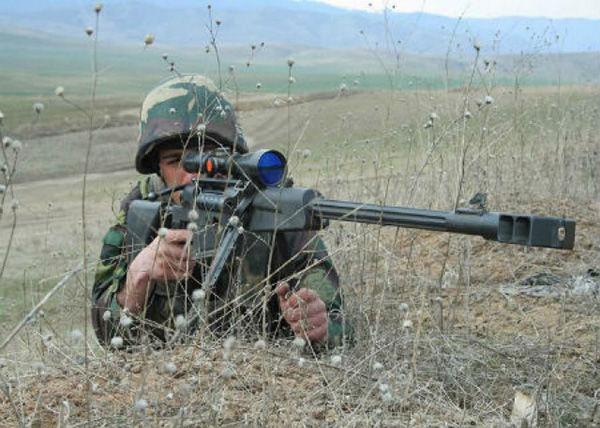
Armeniansharpshooter“Baku continues to grossly violate the ceasefire agreements from May, 1994 and February, 1995, ignore the calls of the Heads of the OSCE Minsk Group Co-Chair countries to refrain from provocative actions and from the escalation of the situation, and the appeals of the international community that through the use of force the conflict can not be resolved , and that only through negotiations stability and peace can be achieved. The recurrent adventurism of Baku pursues an aim to undermine the negotiation process,” Armenian Foreign Minister Edward Nalbandian said in comments to Armenpress.


“Being the initiator and instigator of the provocations, Azerbaijan is trying to put their responsibility on the other sides. However, it is obvious that by rejecting the proposals of the international community on the establishment of a mechanism of investigation of incidents, Azerbaijan is assuming the whole responsibility for the ceasefire violations,” Minister Nalbandian said.


“It is high time for the international community to sober the Azerbaijani leadership, which has lost the sense of reality and is going against the value-system of the international community,” he added.


“Together with the Co-Chair countries Armenia will take the necessary steps for halting the provocative acts, for the stabilization of the situation, for continuation of the negotiation process aimed at the settlement of the conflict exclusively through peaceful means.” Minister Nalbandian concluded.


Armenia Warns Azerbaijan With Punitive Measures if Fighting Continues in Karabakh

OSCE, Russia and United States Urge Immediate Action to Seek Peaceful Settlement of the Karabakh Conflict

The OSCE Chairperson-in-Office and Swiss Foreign Minister, Didier Burkhalter, together with the Co-Chairs of the OSCE Minsk Group, Ambassadors Igor Popov of the Russian Federation, James Warlick of the United States of America, and Pierre Andrieu of France, expressed their deep concern about the intense upsurge in violence along the Line of Contact and Armenian-Azerbaijani border that resulted in numerous casualties reported in recent days. They extended their condolences to the families of the victims and shared the anguish of their grievous losses.


The Chairperson-in-Office and the Co-Chairs of the Minsk Group said that they were deeply concerned about the fact that a clearly marked International Committee of the Red Cross (ICRC) vehicle came under fire while assisting the local population on the Armenian-Azerbaijani border on a humanitarian mission. They strongly condemned the deliberate targeting of civilians and shooting at representatives of international organizations and reminded the parties of their obligations under Geneva Conventions.


They appealed to the Presidents of Armenia and Azerbaijan to take immediate action to defuse tensions and respect the ceasefire agreement. Retaliation and further violence will only make it more difficult to continue efforts to bring about a lasting peace, the Chairperson-in-Office and the Co-Chairs of the Minsk Group emphasized. They also urged the Presidents of Armenia and Azerbaijan to resume as soon as possible negotiations on peaceful settlement of the conflict, being the only way to bring peace and genuine reconciliation to the peoples of the region.


On their part, the United States and Russia have expressed serious concern at the latest upsurge in Armenian-Azerbaijani ceasefire violations, urging the warring sides to seek a peaceful settlement of the Nagorno-Karabakh conflict.


“There can be no military solution to the conflict. Retaliation and further violence will only make it more difficult to bring about a peaceful settlement,” Marie Harf, a spokeswoman for the U.S. State Department, said late on Friday.


“The United States urges the Presidents of Armenia and Azerbaijan to meet at the earliest opportunity to resume dialogue on key issues,” Harf stressed in a statement. She reaffirmed in that context U.S. pledges to remain actively engaged in international efforts to broker a Karabakh settlement.


The Russian Foreign Ministry also reacted to the escalation on Saturday. “We view the events of recent days as a serious violation of ceasefire agreements and stated intentions to achieve a political settlement,” a ministry spokeswoman, M. V. Zakharova, said in statement.


“We believe that a further escalation is inadmissible,” Zakharova said. “We call on all conflicting parties to show restrain, renounce the use of force and take immediate measures to stabilize the situation.”


The Russian ambassador to Armenia, Ivan Volynkin, echoed Moscow’s concerns in comments to Armenian journalists. The Novosti-Armenia news agency quoted Volynkin as saying, though, that the deadly fighting along the Karabakh “line of contact” and the Armenian-Azerbaijani border is unlikely to degenerate into a full-scale war.


OSCE, Russia and United States Urge Immediate Action to Seek Peaceful Settlement of the Karabakh Conflict

Friday, August 1, 2014

Azerbaijan Admits Nine Soldiers Dead After Failed Incursion into Karabakh

In one of its worst military setbacks since the 1991-1994 war for Nagorno-Karabakh, Azerbaijan reported the death of 8 Azerbaijani soldiers on Friday one day after being accused by Karabakh forces of launching yet another incursion.


The Azerbaijani Defense Ministry said that they were killed “as a result of three-day fighting” at various sections of “the line of contact” around Karabakh. “Sabotage and reconnaissance groups of the Armenian army attempted to cross the Line of Contact along the entire frontline,” said a ministry statement cited by Azerbaijani news agencies. Those attempts ended in failure, it said.


The Azerbaijani media identified 9 soldiers killed by the Armenians since Thursday. The death of one of those soldiers was announced by the Defense Ministry in Baku on Thursday just hours after two Armenian servicemen were shot dead in what the military authorities in Stepanakert called a failed Azerbaijani commando raid on northern Karabakh. The Karabakh Defense Army said the enemy suffered “numerous casualties” and left large amounts of “special weapons and equipment” on the battlefield while being repelled by its troops.


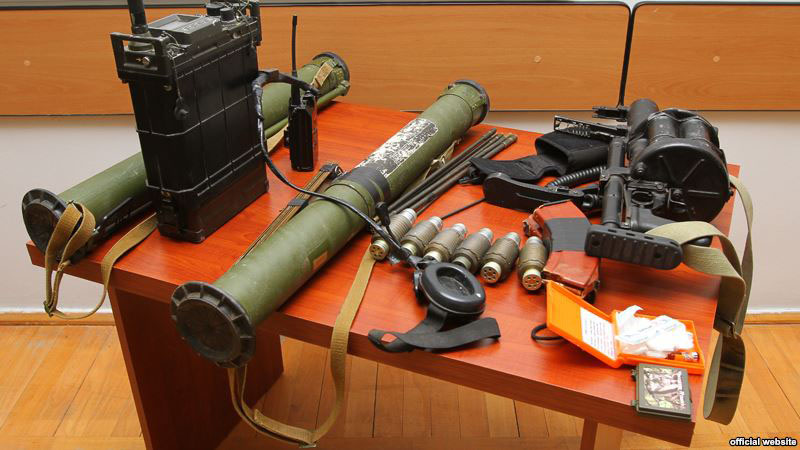
Weapons seized by Karabakh's Defense Army from Azerbaijani forces on 31 July Weapons seized by Karabakh’s Defense Army from Azerbaijani forces on 31 July


The NKR Defense Ministery released on Friday photographs showing some of those weapons, including grenade launchers and radios. Voskanapat.info, a news website close to the Armenian military, claimed that at least 14 Azerbaijani soldiers were killed and up to 30 others wounded in the last two days. It said the Karabakh army believes that five of them died during Thursday’s failed raid.


The publication cited an unnamed senior Karabakh officer as saying that the other Azerbaijanis lost their lives in an overnight Armenian ambush aimed at thwarting a fresh incursion.


Artsturn Hovannisian, the spokesman for Armenia’s Defense Ministry, likewise claimed that the Azerbaijani army underreported its losses. He also insisted that Armenian forces did not attack Azerbaijani frontline positions in recent days.


“This is the result of their short-sighted actions and provocations,” Hovannisian told RFE/RL’s Armenian service (Azatutyun.am). “When they carried out sabotage attacks … they should have realized that they will pay the consequences.”


The Armenian side has repeatedly alleged an upsurge in Azerbaijani cross-border attacks this year. Baku denies this, blaming Yerevan for the increased ceasefire violations along on the Karabakh frontline as well as the Armenian-Azerbaijani border.


The official Azerbaijani version of events was questioned by some pundits in Baku. “How come the attacking side [Armenians] suffered fewer casualties?” Uzeir Jafarov, a military analyst, told the ANS Press news agency. “The war rules are such that the attacker usually suffers more casualties.”


“It looks like our soldiers went on offensive but came under enemy crossfire,” wrote a commentator for Haqqin.az, a pro-government publication. “Even a person lacking elementary knowledge of the art of warfare knows that the attacking side suffers more losses than the opposite side.”


The Azerbaijani army acknowledged 13 combat casualties in the first half of 2014, compared with at least 11 soldiers reportedly killed by the Armenians in all of 2013. The official Armenian combat death toll also stood at 13 in the January-June 2014, up from 7 in 2013.


The latest fighting marked one of the most serious ceasefire violations since the Armenian-Azerbaijani war was stopped by a Russian-mediated truce in 1994. Not surprisingly, the United States was quick to express concern through its chief Karabakh negotiator, James Warlick.


“We are seriously concerned about the recent upsurge in violence along the Line Of Contact. The ceasefire needs to be respected,” Warlick wrote on his Twitter page.


Azerbaijan Admits Nine Soldiers Dead After Failed Incursion into Karabakh