Tuesday, June 3, 2014

Armenia’s Top Customs Union Negotiator Sacked

YEREVAN (RFE/RL) — Deputy Economy Minister Karine Minasian, who has coordinated Armenia’s intensive membership talks with the Russian-led Customs Union, was dismissed on Tuesday for reasons that were not immediately clear.


A statement released by the Armenian government said Prime Minister Hovik Abrahamian relieved Minasian of her duties “in accordance with her request.” It did not elaborate.


Minasian is widely regarded as a member of former Prime Minister Tigran Sarkisian’s inner circle of liberal economists who held senior government positions during his six-year tenure. Virtually all of them, including Economy Minister Vahram Avanesian, lost their posts after Sarkisian unexpectedly stepped down in early April.


Minasian was tasked with handling trade-related negotiations with Russia, Belarus and Kazakhstan shortly after President Serzh Sarkisian decided to make Armenia part of their Customs Union last August. She also coordinated the implementation of Yerevan’s “roadmap” to joining the trade bloc that was agreed with its three member states in December.


Both Avanesian and Minasian said early this year that the accession talks will be completed by the end of April. The negotiation process is still going on, however. Speaking during and after a Customs Union summit in Astana on May 29, President Sarkisian said there are still “two or three technical issues” relating to trade that need to be agreed upon.


Armenia’s quick accession to the bloc currently transformed into the Eurasian Economic Union has also been called into question by a last-minute political condition publicly set by Kazakhstan’s President Nursultan Nazarbayev at the Astana summit.


Nazarbayev said that a separate accession treaty with Armenia must make an explicit reference to its internationally recognized borders. He said Azerbaijani President Ilham Aliyev demanded this in a letter sent to the heads of the union’s three founding member states.


“This is how you joined the World Trade Organization,” Nazarbayev told Sarkisian. “There is a precedent.”


Minasian was among senior Armenian officials who accompanied Sarkisian during his trip to the Kazakh capital.


Armenia’s Top Customs Union Negotiator Sacked

International Committee "Liberty and Justice for Sevan Nishanyan" Calls for his Release

ISTANBUL — The members of the International Committee “Liberty and justice for Sevan Nishanyan” called on human rights organizations for immediate action to release the imprisoned Armenia linguist in Turkey.


The members of the organization spread a press release which reminds that the International Committee “Liberty and justice for Sevan Nishanyan” has joined a large number of intellectuals and members of various civic organizations, taking into consideration the unbearable prison conditions, their gradual deterioration and threats of new lawsuits.


The committee members called the decision made by the court on Nishanyan’s case a real mockery of the Turkish justice, which is unacceptable in terms of human freedom. “The committee qualifies Nishanyan’s imprisonment as an overt manifestation of hatred and discrimination. Nishayan being an intellectual, who does not reckon with the thesis of the so-called state brains, is exposed to such violence. The International Committee “Liberty and justice for Sevan Nishanyan” calls on the Turkish authorities to immediately release Nishanyan and put an end to the pressure and violence against him.


The Committee calls on the world community, the international and human rights organizations to take the initiative to criticize the actions taken against Nishanyan the pressure and violence perpetrated against him, and to have him released immediately.


The committee members also expressed their concern about the health of the Armenian linguist and his future. They hope to redress the injustices applied against Sevan Nishanyan, and the Armenian linguists will eventually be released from prison.


International Committee "Liberty and Justice for Sevan Nishanyan" Calls for his Release

Armenian Bar Association Elects New Leadership

NEW YORK — With the installation this week of a veteran and dynamic leadership team, the Armenian Bar Association continues into its 25th year of service to the Armenian Diaspora and to the Homeland. So, too, has the Association–for as long a time and with your continued support and participation–built an unparalleled professional organization.

The Armenian Bar Association’s Executive Committee is headed by Armen K. Hovannisian as the Chairman of the Board of Governors.


Joining Hovannisian at the helm is the Association’s Chairman Ex-Officio, Garo B. Ghazarian of Los Angeles.


The Vice-Chairmen are Harry Dikranian of Montreal, Edvin Minassian of Los Angeles, and Gary Moomjian of New York.


The Treasurer is Saro Kerkonian of Los Angeles.


The Secretary is Katherine Ossian of Detroit.


The spirit of our late Chairman Emeritus, Vicken I. Simonian, will continue to serve and inspire.


The Board welcomes to its general ranks Christine Engustian of Providence and Vanna Kitsinian of Los Angeles, and thanks Laura Karabulut of Toronto and Ara Babaian of Los Angeles for their years of service on the governing body. The great breadth and diversity of the Board of Governors are represented by incumbent members Raymond Aghaian of Los Angeles, Michael Amerian of Los Angeles, Sara Bedirian of Los Angeles, Judge Amy Hoogasian of San Francisco, Gerard Kassabian of Los Angeles, Nigol Manoukian of Los Angeles, Hovanes Margarian of Los Angeles, and Sonya Nersessian of Boston.


Together and individually, the officers of the 2014-2015 Executive Committee and their fellow Board members embody, and in many ways are responsible for, the Association’s proven track record of success. That record includes:


” strengthening and extending our collective voice on impact issues such as our protections of Genocide truths and our challenges to Genocide falsifications;

” laying the groundwork for the stages of justice beyond Genocide recognition;

” lending our expertise to some of the many necessary legal reforms in the Republic of Armenia;

” standing up and speaking out for the human and civil rights of Armenians around the world;

” planning cutting-edge legal education programs, performing pro bono legal services, and hosting highly-amped social receptions and professional exchanges; and

” establishing and broadening the common ground for our members who share, importantly, the same profession and, more importantly, the same Armenian heritage.


E Pluribus Unum…Out of Many, We are One


Armenian Bar Association


Armenian Bar Association Elects New Leadership

Monday, June 2, 2014

Benefit Evening Raises Funds for Dikranagerd’s St. Giragos Church

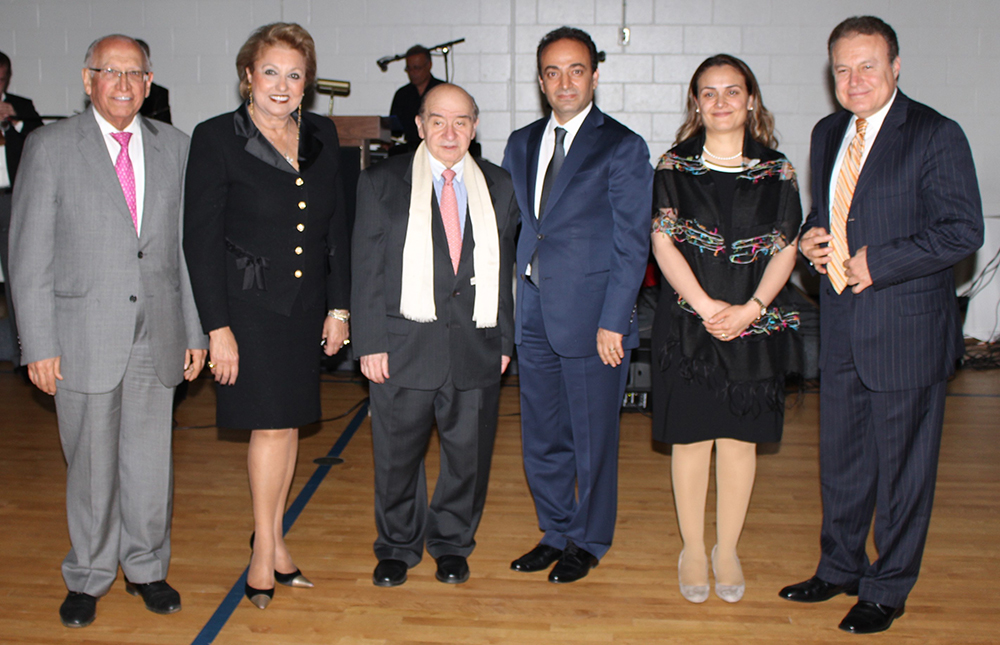
NEW MILFORD, NJ — A fundraiser earmarked for the continued restoration of the St. Giragos Church in Dikranagerd took place on Saturday, May 17 at Hovnanian School’s Banquet Hall.


The occasion provided the opportunity to honor two individuals who have been critical in the renovation of the church, including Vartkes Ergun Ayik, Chairman of the St. Giragos Church of Dikranagerd who received The Lifetime Achievement Award as well as the Honorable Osman Baydemir, Metropolitan Mayor of Dikranagerd, who was given the Friends of the Armenians Award.


In his welcoming remarks, Hirant Gulian, who has spearheaded fundraising efforts in the Diaspora, recognized Mayor Baydemir and Mr. Ayik and their families who traveled from Dikranagerd to attend the Benefit Evening. He presented both with their respective awards and expressed gratitude for their commitment to the St. Giragos Restoration Project.


From (l-r) Dr. and Mrs. Raffy and Vicki Hovanessian, Hirant Gulian, Mrs. Reyhan Baydemir, Mayor Osman Baydemir and Dr. Ohan Karatoprak From (l-r) Dr. and Mrs. Raffy and Vicki Hovanessian, Hirant Gulian, Mrs. Reyhan Baydemir, Mayor Osman Baydemir and Dr. Ohan Karatoprak


Accepting his award, Mayor Baydemir said the pain of the past is still being felt by the generations that have followed.


“Despite all the suffering we have to move ahead and make things right,” said Mayor Baydemir. “Armenian brothers should feel ownership of this church because Armenians are a part of Dikranagerd.”


Noting that St. Giragos is the biggest Armenian Church in the Middle East, Mr. Ayik stressed the importance of the Istanbul and Diasporan Armenians who worked together to collect money for the renovation as well as the moral support of Mayor Beyman since the project’s inception.


“This project is an important sign of apology,” said Ayik, who said that St. Giragos is the most visited church in Turkey and now holds social activities such as classical music concerts for the public.


Mr. Ayik’s daughter Pelin presented a historical slideshow of the city of Dikranagerd and the St. Giragos Church, which is experiencing increased numbers of Armenians in attendance during church service. She stressed that the Turkish government did not contribute to the project because if they did, it would have turned into a museum instead of an active church.


Professor Vartan Abdo, Director of the Armenian Radio Hour of New Jersey, served as Master of Ceremonies. A special performance was made by the Akh’Tamar Dance Ensemble of Hye Doon and musical entertainment was provided by oud players Udi Yervant from Dikranagerd and Mike Uzatmajian as well as Vicken Makoushian and DJ Berj.


St. Giragos was originally constructed in the 15th century and was rebuilt in the 19th century after a fire damaged the sanctuary. The church has seven bell towers, the first of which was built in 1884 and was cast by the world famous Zildjian Company), making it the tallest structure in Dikranagerd. The church is known for its seven altars, signifying “eternity” in the Armenian alphabet and the church can accommodate more than 2,500 faithful during services.


The restoration project of St. Giragos, which remains in possession of the Armenian community under the jurisdiction of the Patriarchate of Istanbul, began six years ago under the leadership of Ayik. Through fundraising efforts by the church and worldwide Dikranagerdtsis, two and a half million dollars has been raised so far.


Tax-deductible donations for the St. Giragos Church Restoration Project can be made to The Diocese of the Armenian Church, 630 Second Avenue, New York, NY 10016 with the memo: Dikranagerd Fund.


Benefit Evening Raises Funds for Dikranagerd’s St. Giragos Church

Aspiring to Secure a Successful Future for your Kid? Opt for Bilingualism!

By Arda Jebejian (Sociolinguist)


What if you were told there was a way to bolster your cognitive skills, increase your intelligence, and avoid Alzheimer’s, all you had to do was learn another language?


Bilingualism: the villain?

But bilingualism is often associated with a number of negative phenomena. From the early 19th century to about the 1960s, there was a widespread belief that the weak, oppressed linguistic minorities and the powerless in society are bilingual, and that bilinguals are lazy, stupid, left-handed, unreliable, and morally inferior.


Researchers report that bilingualism used to be and is still often associated with poverty, powerlessness, immigrants, minorities, and subordinate social positions. Individuals with a double linguistic and cultural identity are still often thought of as deviant, somewhat suspect, dangerous, impure, slightly abnormal, and linguistically and mentally confused. Bilingualism, then, is something a person must get away from if they wish to succeed in climbing the social ladder.


There are many stories of children who spoke their native language in school having their mouths washed with soap and water or being beaten with a cane. Kenyan author Ngugi wa Thiong’o recalls from his school days

One of the most humiliating experiences was to be caught speaking Gikuyu in the vicinity of the school. The culprit was given corporal punishment and was made to carry a metal plate around the neck with inscriptions such as I AM STUPID or I AM A DONKEY.

In the US and Australia indigenous children were stolen from families and forced into boarding schools where they were beaten if they spoke their mother language. African slaves who spoke the same indigenous languages were separated upon sale to ensure that they could not communicate to conspire for freedom. Those who were found speaking their indigenous language were savagely beaten.


Today, the English-Only movement’s agenda in the US, for example, is to ratify a constitutional amendment which would outlaw all bilingual programs and services provided by federal, state, and local governments; convince Congress to repeal bilingual ballot requirements under the Voting Rights Act; and sharply reduce federal programs for bilingual education. In the history of the US, English-Only campaigns have targeted almost every non-English-speaking group of immigrants, but the current anger is largely targeted at Spanish-speaking Latino immigrants. Spanish is often described as a “dirty language, one spoken by those who are lesser-than, who are other, who are not American.”


This is illustrated in Rodriguez’s autobiography Hunger of Memory, in which he describes the turning point in his language background when his teachers visited his parents and encouraged them to speak English with their children. Rodriguez describes the effect of this language switch on the family’s interaction at home thus:


The family’s quiet was partly due to the fact that, as we children learned more and more English, we shared fewer and fewer words with our parents. Sentences needed to be spoken slowly when a child addressed his mother or father. (Often the parent wouldn’t understand.) The child would need to repeat himself. (Still the parent misunderstood.) The young voice, frustrated, would end up saying, “Never mind”–the subject was closed. Dinners would be noisy with the clinking of knives and forks against the dishes.


Thinking in two languages

Interestingly, research has consistently found that bilingualism is a cognitive, social, and educational advantage and that, consequently, bilingual students tend to outperform their monolingual peers in key cognitive tasks.


Bilinguals can focus on the key parts of a problem and select the crucial parts of a solution. They apply this analytical skill in language, communication, thinking, and visual perception. This gives bilingual learners advantages in divergent and creative thinking and in analysis.


Because bilingual children are able to switch between languages, they develop more flexible approaches to thinking through problems. Their ability to read and think in two different languages promotes higher levels of abstract thought, which is critically important in learning.


Children who learn to read in their home language have a strong foundation to build upon when they learn a second language. They can easily transfer their knowledge about reading to their second language. Endorsing the latter view, McLaughlin states: “The child who has mastered two languages has a linguistic advantage over the monolingual child. Bilingual children become aware that there are two ways of saying the same thing.”

Bilingualism supports children to maintain strong ties with their entire family, culture and community. All of these are key parts of children’s developing identity. Bilingual children are also able to make new friends and create strong relationships in their second language. Thinking in a second language frees people from biases and limited thinking. Recent research has also found that children raised in bilingual households show better self-control which is a key indicator of school success. Researchers agree that school readiness and success for children who are dual language learners is tied directly to mastery of their home language.


Bilingualism can improve the brain

Various studies are cited as evidence that bilingualism improves the functioning of the brain in many ways. Bilingualism gives the brain a “workout that strengthens its cognitive muscles”.


Knowing more than one language makes the brain operate in more complicated ways, thus challenging it to grow, change, and adapt. For bilingual people, both languages are “always on,” always active in their brains, no matter which language they are speaking at the moment. Therefore, for a bilingual, the executive control system is used in every sentence they utter. That’s what makes it strong.

There is evidence that being bilingual can improve the brain by causing changes in brain structure. There is detectable growth in the hippocampus, which helps govern memory and mastery of new material, and in three areas of the cerebral cortex, where higher-order reasoning is processed. Recent research indicates that dementia and Alzheimer’s disease occurred four or five years later among people who spent their lives speaking two languages compared to those who spoke only one.


Conclusion

In summary, the arguments against bilingualism are inaccurate. And as Armenians, we are lucky. We already have a native language, Armenian. Other than the benefits an extra language offers, using Armenian at home will retard its extinction and help revitalize it. In February 2012, western Armenian joined UNESCO’s online Atlas of World Languages in Danger, earning the “definitely endangered” status, meaning it will become extinct by 2100.


The mother tongue, in Armenians’ case, the Armenian language, is

- a positive symbol of cultural pride

- a means of maintaining practical and emotional contact with the homeland and with oneself

- a tool that strengthens family cohesion, confidence, self-esteem and pride

- a means of socialization into one’s culture

- a vehicle for transmitting the cultural heritage of the past, reshaping it, and passing it on to the next generations.

Optimally parents’ efforts must be exerted to instill pride in the Armenian language and identity and create a linkage system, whereby children and adolescents utilize the Armenian language or relearn it, transmit it intergenerationally and use it to be “smart”.

Paul Lewis, Ethnologue editor, says,

Languages are not simply a collection of words. They are living, breathing organisms holding the connections and associations that define a culture. When a language becomes extinct, the culture in which it lived is lost, too. When language transmission breaks down, a part of human culture, history, and inherited knowledge is lost for ever.

Today certain Greek, Korean, Italian and Chinese communities in the US and Canada are mobilizing to maintain the languages of their forefathers in the diaspora, because they

- feel proud once more of their heritage

- have begun to develop a positive attitude toward their language

- have resolved to benefit from the values offered by their language

- have begun to become conscious of the importance of national unity

- have grasped the importance of their connectedness to their homeland, and

- have decided to cling to their unique religious beliefs and rites.


What Can WE Do?

We can do exactly what the Greeks, Koreans, Italians and Chinese are doing to maintain and revitalize their mother languages. It is as simple as that.


Aspiring to Secure a Successful Future for your Kid? Opt for Bilingualism!

Weaving Economic Prosperity in Stepanakert

Armenia Fund is pleased to bring you a new series on welcome developments in Armenia, including Artsakh. For over two decades, the Fund has been doing humanitarian work throughout Armenia and this series is an opportunity to showcase welcome developments in the country, sometimes as a direct result of Armenia Fund’s work and sometimes as the product of innovation and pure determination.


Among the most storied of Armenian artistic traditions, carpet weaving had its historic epicenter in Artsakh, a crossroads for traders between Asians from the east, Persians and Arabs to the south and southwest, and Romans and other Europeans to the west.


The vivid hues, painstaking detail, and original designs made Armenian rugs – particularly those from Artsakh – a prized good, highly sought after for their quality and aesthetic depth. As traders exported physical rugs, they took with them the stylistic elements unique to rugs of Armenian origin that then infused rugs made in other regions.


Flora-Rima-and-Aveta-Clean-Raw-Wool-Before-ProcessingMuch of the Armenian rug industry was abruptly and violently uprooted during the Genocide and the parallel physical and cultural destruction of Artsakh’s Armenian population. During much of the 20th century, Armenian rugs were usurped by Turks in the west and called Turkish while Armenian rugs in the east were stolen by the Azerbaijanis and called Azerbaijani.


Some production continued in the Soviet Union but with millennia-old techniques and processes violated and then sternly curtailed, Armenian carpet weaving was a shadow of its former self. Independence changed all that.


Today, Armenian rug making is being revived in Artsakh. And not just the rugs. The actual process of the making rugs, using traditional methods without the use of any mechanized machinery are also making a comeback. These efforts are being spearheaded by the Stepanakert Rug Company.


The previously derelict Karabakh Silk Factory shut its doors at the fall of the Soviet Union but was recently born anew as the site of a burgeoning business zone.


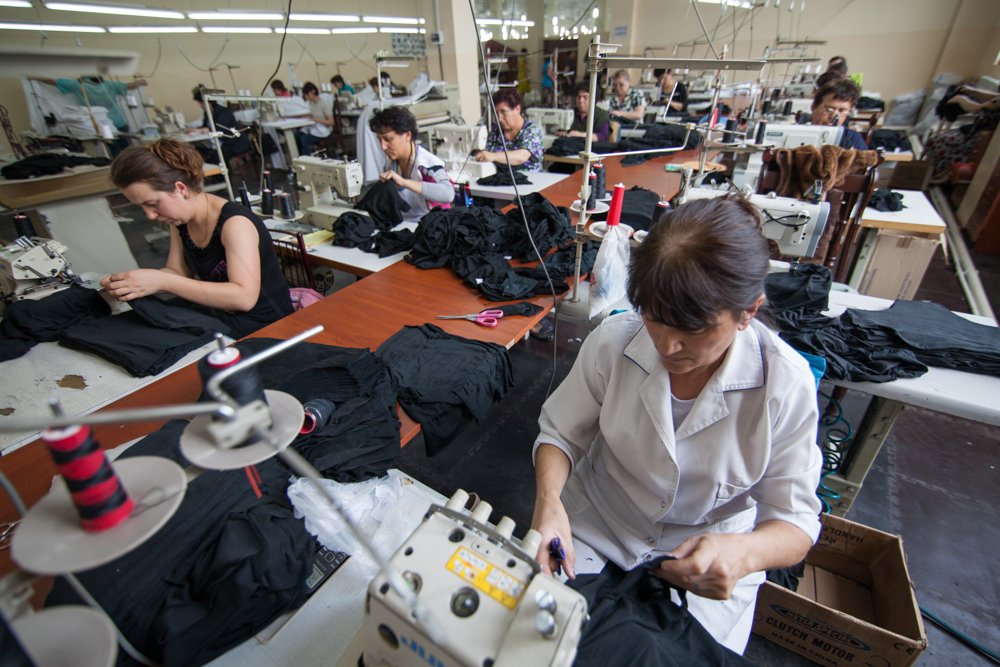
Putting to work dozens of employees from Stepanakert and surrounding areas, the rug company leased a space in the factory and made it into the main production center for high-quality, hand-woven Armenian rugs from Artsakh.


Most of the employees at the factory are previously unemployed women. With competitive pay and good working conditions, the rug company is creating opportunities that are helping to train a new and skilled workforce.


The rugs are completely locally produced good, 100% made in Artsakh. Besides the workers, the factory, and the traditional designs, the materials used in the rugs, particularly the pure lamb’s wool, are locally sourced. In fact, once the raw wool arrives, it is taken to the basement of the same building where another local company cleans it, refines it, colors it, and then sells it to the rug making operation upstairs. The synergies between the different businesses create jobs from the farms providing the wool to the people working the machines that refine and color the wool, to the carpet weavers.


The rugs are woven using the traditional Armenian method of a double knot contrasting with the Persian one and a half knot, making the rugs produced in Artsakh denser, of a better quality, and competitive. And it’s all done by hand – no machines.


Artsakh doesn’t have a large market but that’s not stopping the Stepanakert Rug Company from setting its sights on the global market. With a short drive on the Stepanakert-Goris highway, built by Armenia Fund, goods easily reach Yerevan for delivery anywhere in the world. Envisioning a high demand for its product, the company has opened two more production centers in the north and the south of Artsakh.


Seamstresses-Producing-New-ClothingThe export-oriented company’s success is encouraging larger enterprises to consider Artsakh as a business hub with a talented workforce ready to deliver high-quality products at reasonable costs.


Along with generous incentives from the government, the climate has been ideal for other businesses to set up shop in the same facility as the Stepanakert Rug Company. Among them is a wool processor, textile fabric manufacturer, a clothier, and a nearby, renovated building that will be the future home of food processing businesses.


In another part of the building, massive silk processing machines remained in the factory after it shut down, not sold as scrap metal to Iran unlike was done in other parts of Armenia. The restored machines, having undergone extensive upgrades, were fired up for the first time in decades and are now functioning and productive parts of the larger facility.


Together, these outfits are employing hundreds of locals, many of whom did not have jobs for before the Karabakh Silk Factory was reopened as a center for business.


Infrastructure is important. Highways, schools, hospitals, and waterways form the foundation upon which creativity, ingenuity, and growth thrive. So, while Armenia Fund, with its worldwide network of benefactors, continues to strengthen Armenia’s infrastructure, it’s worth occasionally stepping back and seeing the impact it has already had in areas that might not seem connected but which are part of the same flourishing ecosystem. The Stepanakert Rug Company and its neighbors in the old Karabakh Silk Factory know that and they represent the fruits of a decades-long faith in a better Armenia built by all Armenians.


Weaving Economic Prosperity in Stepanakert

Turkish Arm-Wrestler Barred from Azerbaijan Because of ‘Armenian’ Name

BAKU — A Turkish arm-wrestler has reportedly been barred from entering Azerbaijan and participating in a major competition there because of his last name which Azerbaijani immigration authorities felt is Armenian.


Zafer Noyan, a 24-year-old resident of the Turkish city of Diarbekir, flew to Baku last week to compete in the 2014 European Armwrestling Championship along with other members of Turkey’s national team.


Several Turkish news services reported on Thursday that immigration officers at Baku airport told Noyan that he cannot enter the country because they believe he is an ethnic Armenian. They said the young athlete was put on another plane and flown back to Istanbul despite his assurances that his surname and ethnic origin are not Armenian.


It is not clear whether the Turkish team managers or the European Armwrestling Federation protested against Noyan’s expulsion.


The Azerbaijani authorities have long banned Armenian nationals and ethnic Armenian citizens of third countries, including Turkey, from travelling to Azerbaijan. They consider any Armenian presence in the country an affront to its honor and the memory of Azerbaijanis killed in the unresolved conflict over Nagorno-Karabakh.


Turkish Arm-Wrestler Barred from Azerbaijan Because of ‘Armenian’ Name